


Problems we solve
See what you run. Find what it costs you. Change it safely.
InfrOS maps your existing cloud, flags drift and waste with the evidence attached, and delivers emulation-validated changes as pull requests your team reviews. It never touches live infrastructure.

Governance
You choose the access level. Every change is a pull request through your own CI, with a full history in Git.
Resilience
Every alternative is scored for its impact on resilience and availability, and every change ships with a rollback plan.
Drift
Automatic drift detection keeps your cloud aligned with its intended state as your system evolves.
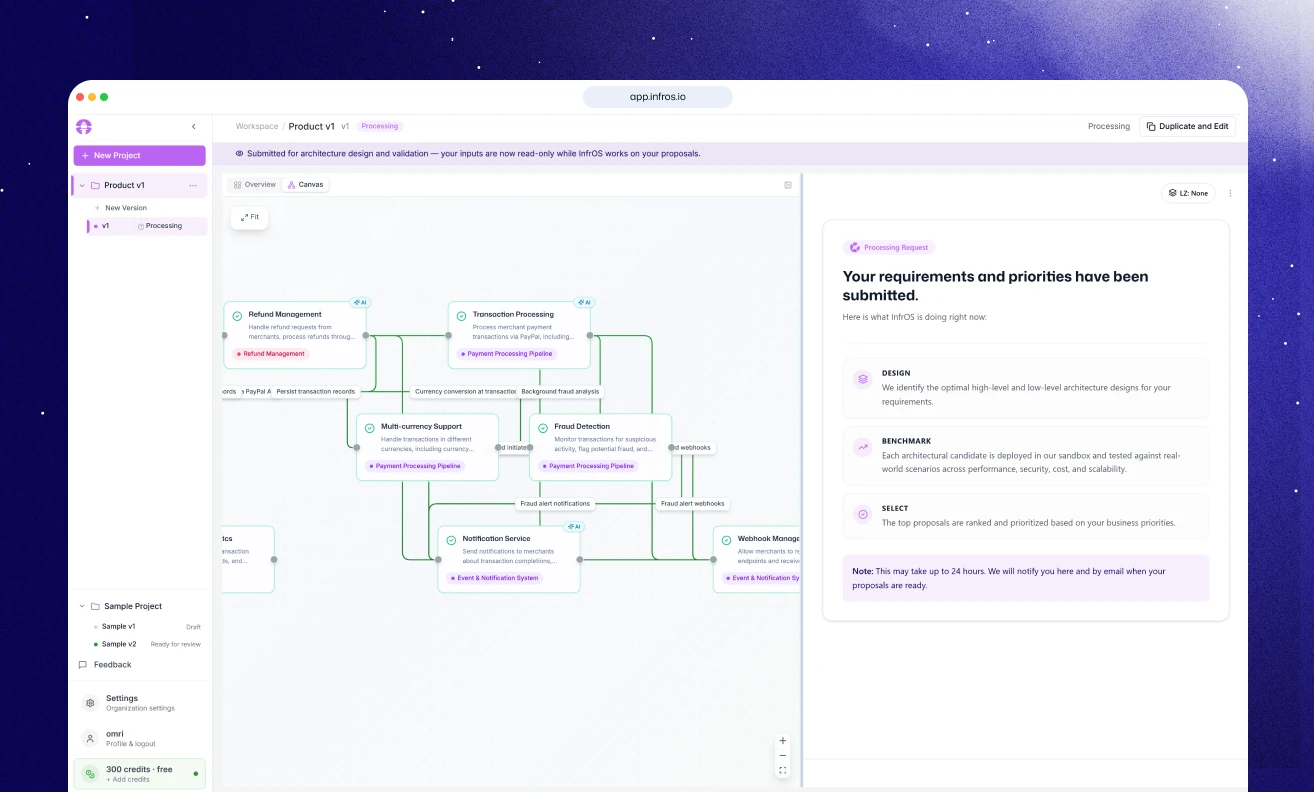
There's no org-wide, readable view of what you run
Cloud consoles list resources. They don't show how the system fits together, or why it was built that way.
What InfrOS does: automatically maps your full environment into a system architecture, and adds context from your docs, PRDs and Git repos that cloud APIs can't see.
What changes: one complete, connected map of what you run.

Waste goes unnoticed until the bill spikes
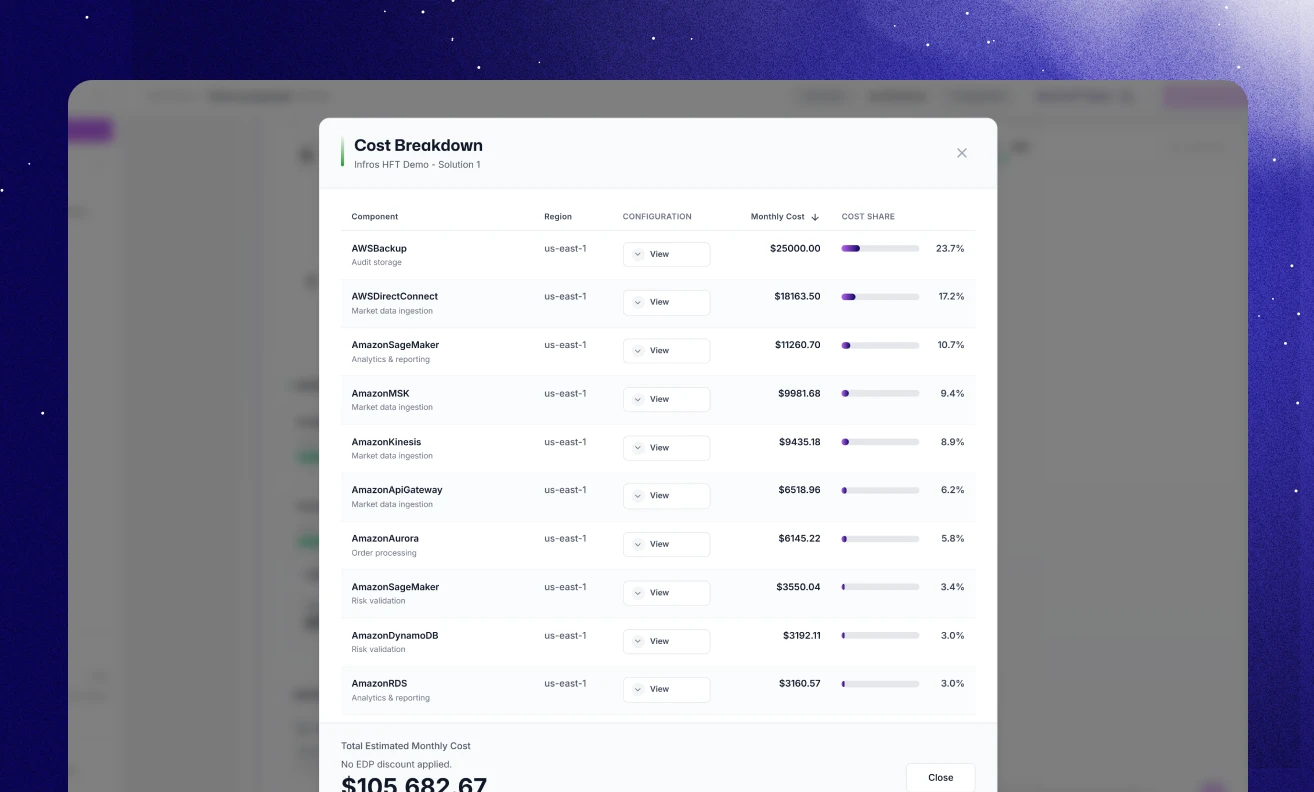
Over-provisioning, wrong storage tiers, unused capacity, inefficient data and network flows. None of it raises an alarm. It just shows up on the invoice.
What InfrOS does: detects inefficiencies and attaches the evidence to each finding. Every alternative is scored by gain, risk and effort.
What changes: savings you can verify, not estimate.
Teams don't want AI changing live infrastructure unreviewed
And they're right. An unreviewed change to production is a risk no platform team should have to accept.
What InfrOS does: delivers every change as a Git pull request through your own CI, defined as Terraform, with migration and rollback plans.
What changes: your team reviews and runs every change. InfrOS never touches live infrastructure.


Scored across seven pillars, not just cost
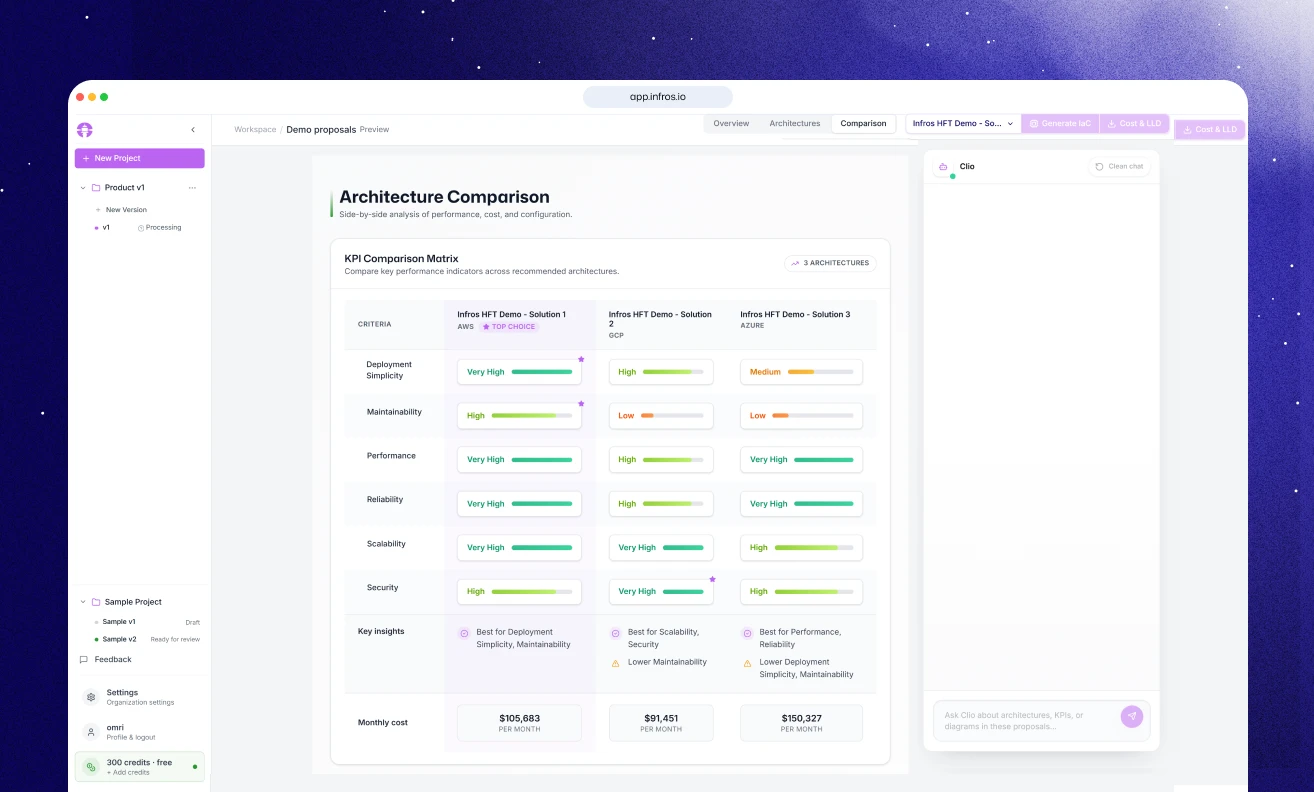
Proven, not predicted
See it on your own environment
Get your cloud mapped, with drift and waste findings you can check for yourself.