


How a European energy utility validated resilience across 500 workloads
A major European energy utility runs roughly 500 workloads across four Azure regions. The environment had grown too large to reason about by hand, leaving optimization reactive and disaster recovery impossible to validate with confidence.
Working with InfrOS, the utility mapped its whole environment as one architecture, compared options with the trade-offs in view, and put every change under continuous conformance. The result: over 30% of in-scope cloud spend identified as reducible, a cross-region rebuild rehearsed at a four-hour Recovery Time Objective (RTO) and a fifteen-minute Recovery Point Objective (RPO), and drift caught in hours instead of at the next audit.
Key Takeaways

Seeing ~500 workloads as one connected architecture, not a list of resources, is what makes both optimization and recovery possible.

Every change has a ripple effect. Comparing complete designs, weighed on the utility's own priorities, surfaces the real trade-offs.
The strongest options were validated against the requirements before deployment, so decisions rested on evidence rather than assumption.
Because the model stays connected to the live environment, drift is caught in hours, not at the next audit.
No one can hold 500 workloads in their head
The utility supplies electricity to millions of people. Its systems run on Microsoft Azure, where availability, security, and compliance are non-negotiable.
The environment had grown to nearly 500 workloads across four regions. It was too large to reason about by hand. The team could manage individual resources, but not understand how the environment behaved as a system.
The Solution
See, compare, prove, and keep evolving
The team needed to see the environment as one architecture, compare real options, decide with evidence, and keep evolving. They did it in four steps.
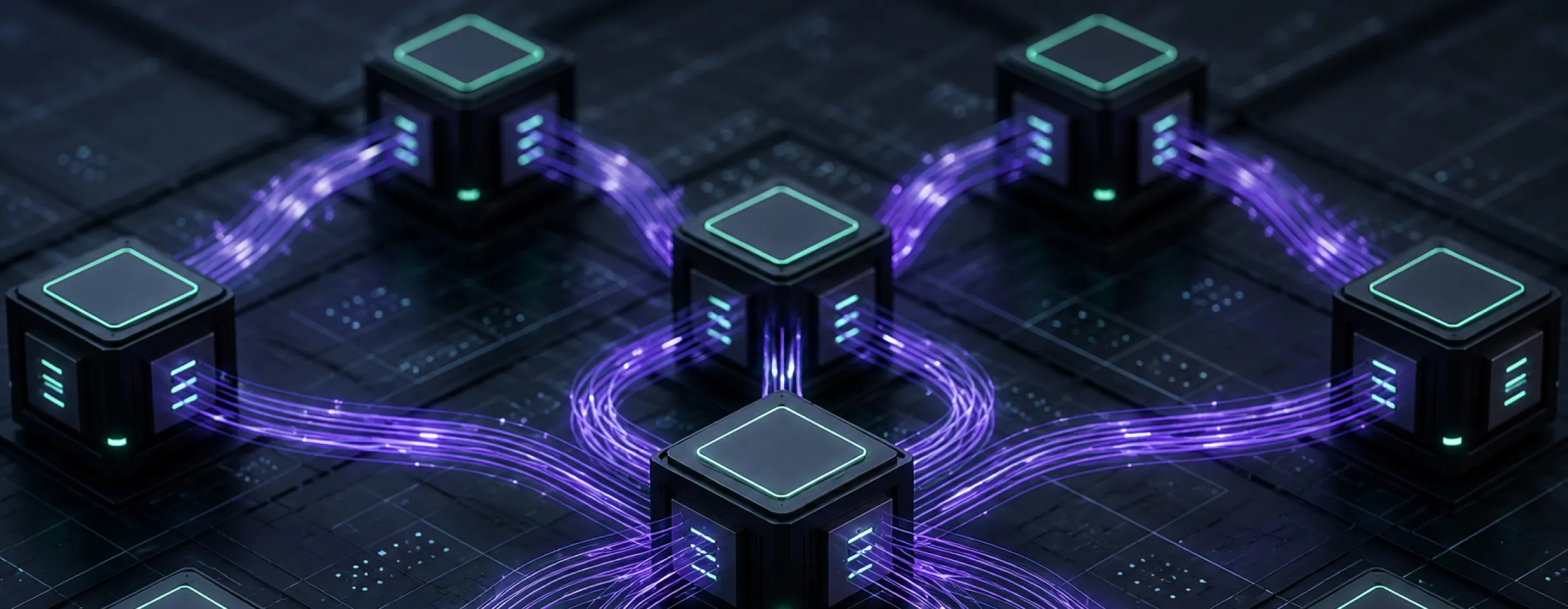
1. See the whole environment as one architecture
With read-only access, the team could finally see the environment as a single live model, with ~500 workloads, their dependencies, and data flows, not just a list of resources. This became the basis for every decision that followed.
2. Compare whole-architecture options, with the trade-offs in view
For each workload, the team could weigh the current design against alternatives in other regions or another cloud. Every option was measured against their own priorities - cost, performance, resilience, security, compliance, data residency, and recovery. Because every architecture change has a ripple effect, options were compared as complete architectures, so the team could see the trade-offs and decide with evidence.
3. Prove the decision, then deliver through your own process
The strongest options were validated against the team's requirements before production. Approved decisions became production-ready Terraform, raised as pull requests in the team's own repository, with the requirements travelling alongside the code. The team reviewed, approved, and deployed through its own Git process. The decision stayed in their hands.
4. Stop drifting, start evolving
The model stays connected to the live environment and keeps checking whether the architecture still meets its requirements. When something drifts, the team gets clear options for what to change next, with the impact laid out. They approve; the change ships. Evolution runs on evidence, not guesswork.
Architectural control, and the proof to back it
More than 30% of in-scope cloud spend was identified as reducible - specific, evidenced opportunities tied to individual workloads. Disaster recovery became provable rather than theoretical: a cross-region rebuild rehearsed at a ~4-hour RTO and ~15-minute RPO, with an alternate-cloud path held in reserve.
Because the model stays live, drift, capacity gaps, security issues, and optimization opportunities surface in hours, not at the next audit. Most importantly, the same model used to understand the environment and make the initial decision continues to evaluate it as workloads, technology, costs, and priorities change.
spend reducible
RTO / RPO, rehearsed
resources mapped
to catch drift